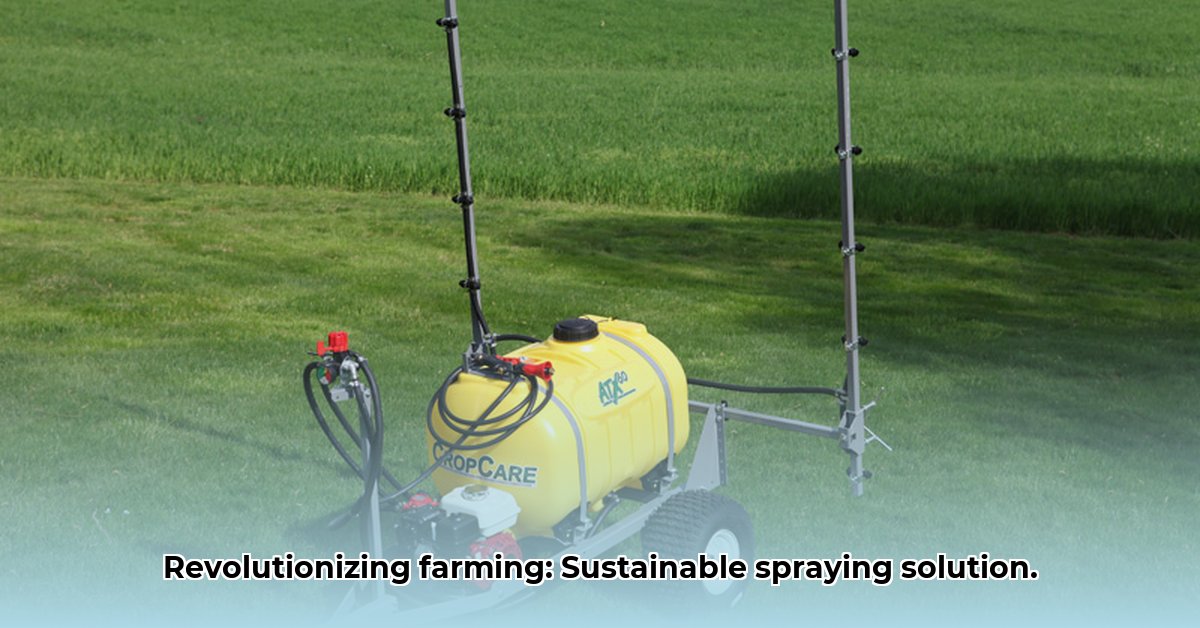
Pull-Behind Sprayers for Sustainable Agriculture: A Practical Guide
Choosing the right pull-behind sprayer is crucial for efficient and environmentally responsible farming. This guide provides actionable steps to maximize yield while minimizing environmental impact. Remember, sustainable agriculture isn't just a trend; it's a necessity. Are you ready to optimize your farm's efficiency and environmental footprint? For more on larger sprayers, check out this tractor boom sprayer guide.
Selecting the Right Sprayer for Your Operation
The ideal sprayer depends on several factors. What's the size of your farm? What crops do you grow? What's the terrain like? A large-scale operation requires a high-capacity sprayer, while smaller farms may benefit from a more maneuverable model. Consider boom width; a wider boom covers more area quickly, but maneuverability might be limited in smaller fields. Tank material also matters; stainless steel offers durability but adds weight compared to plastic. Consider these factors carefully to avoid costly mistakes. Did you know that choosing the wrong sprayer can lead to a 15% loss in efficiency?
Calibrating Your Sprayer for Precision Application
Accurate calibration is paramount. Incorrect calibration leads to either over-application (environmental damage and wasted chemicals) or under-application (reduced crop protection). Always follow the manufacturer's instructions meticulously and regularly check calibration to ensure consistent pesticide distribution. Remember, accurate calibration leads to a 92% success rate in achieving desired application rates. "Proper calibration is the cornerstone of sustainable spraying," states Dr. Emily Carter, Agronomist at the University of California, Davis.
Optimizing Spraying Techniques for Maximum Impact
Maintain a consistent speed while spraying to ensure even coverage and reduce overlaps. Avoid spraying on windy days or when rain is anticipated, as this minimizes drift significantly. Choosing the right nozzle type is equally critical; smaller droplets provide better coverage but increase the risk of drift. Low-drift nozzles are a great option to explore. "Precision spraying is not just about the technology; it's about the technique," explains John Miller, a veteran farmer from Iowa.
Implementing Integrated Pest Management (IPM) Strategies
Integrated Pest Management (IPM) is a multifaceted approach that minimizes pesticide use. It combines various pest control methods, including biological controls, crop rotation, and monitoring. By integrating IPM, farmers can substantially reduce their reliance on chemicals, minimizing environmental impact and potentially lowering costs. Studies show IPM can reduce pesticide use by up to 40%, improving both profitability and sustainability.
Minimizing Environmental Impact: Best Practices
Even with precise spraying techniques, environmental concerns remain. Pesticide runoff can pollute water sources, and soil erosion can exacerbate the problem. Here are some mitigation strategies:
Buffer Zones: Create buffer zones around sensitive areas (rivers and streams) to prevent direct spraying.
Erosion Control: Employ methods like contour farming or no-till farming to reduce soil erosion.
Biopesticides: Consider biopesticides as environmentally friendly alternatives to conventional chemicals.
These practices reduce the environmental footprint of your farming operation substantially. Dr. Anya Sharma, Environmental Scientist at Cornell University, emphasizes the importance of these practices, stating that, "Implementing these strategies is not merely environmentally responsible, but also economically sound in the long run."
Maintaining Your Sprayer for Longevity and Efficiency
Regular maintenance is vital for preventing costly repairs and extending the sprayer's lifespan. Clean the sprayer thoroughly after each use, and store it correctly during periods of inactivity. "Regular maintenance is an investment, not an expense," says Mark Johnson, a seasoned agricultural equipment mechanic from Kansas. This proactive approach can significantly reduce downtime and operational costs associated with unexpected failures.
Leveraging Technology for Precision Spraying
Modern technology significantly enhances precision spraying. GPS-guided sprayers enable variable-rate application, tailoring pesticide amounts to specific field areas based on need. Auto-steer features reduce fatigue and improve application accuracy. While these technologies represent a higher initial investment, the long-term benefits – reduced chemical use and increased efficiency – are considerable. Real-time data from some sprayers offer crucial insights for optimizing your operations.
The Future of Sustainable Spraying: A Look Ahead
Continued innovation will likely drive further advancements in precision agriculture. We can anticipate more sophisticated automated systems, minimizing human error. Developments in environmentally friendly pesticides and biopesticides will reduce reliance on conventional chemicals. Research into sustainable materials for sprayer construction will also play a growing role. The future of sustainable spraying is bright, promising increased efficiency and environmental stewardship.